- Understanding Relative Feed Value (RFV)
- Feedstuffs for Sheep and Lambs (check out the hay section)
- National Pork Board Statement on PEDv
- Recent article on PEDv from PorkNetwork
- Article about possible PEDv Vaccine
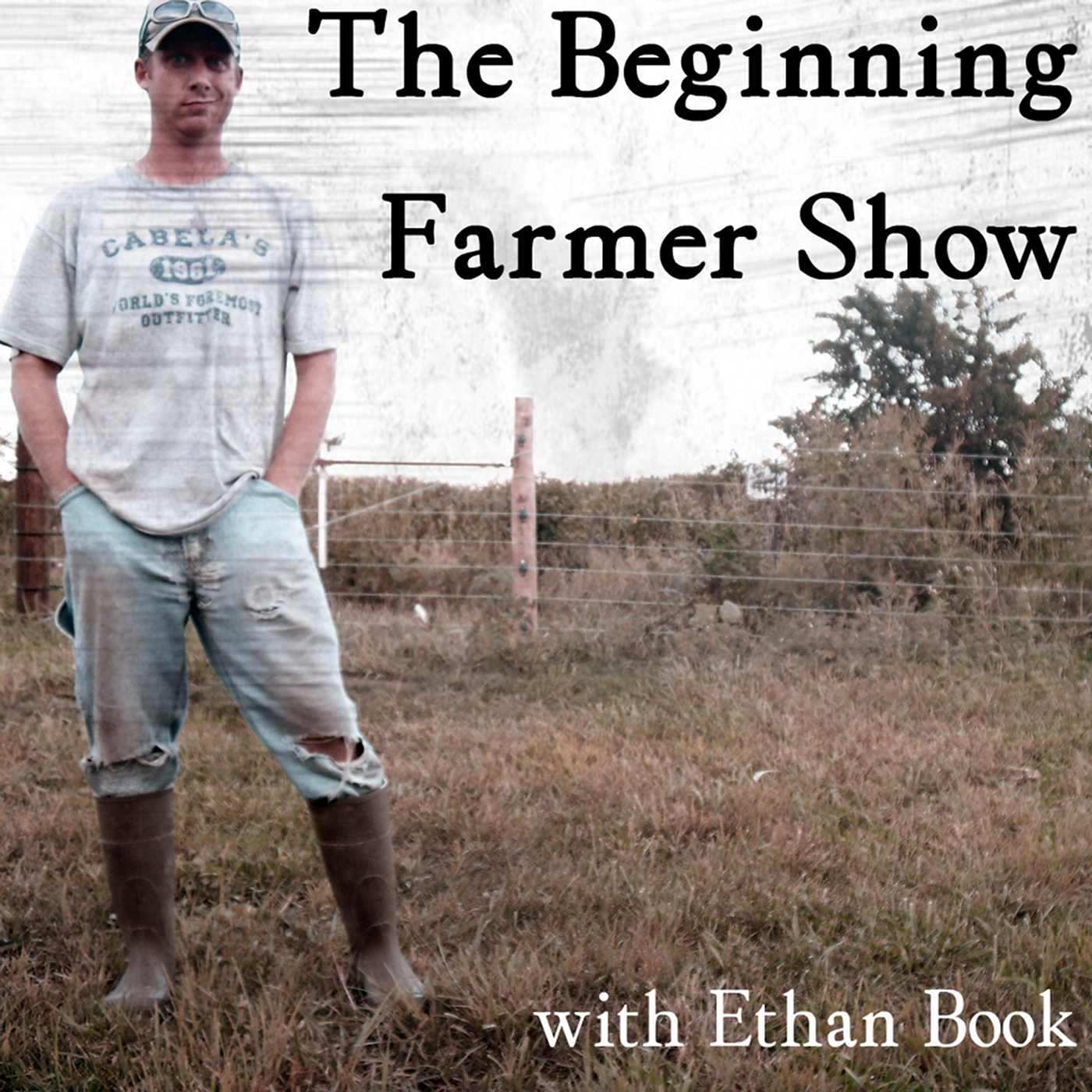
The Journey of a Beginning Farmer :: As a child I spent most of my life in town living with my mom, but whenever I visited my Dad and his side of the family it was on the farm. From my earliest memories I have always wanted to be a farmer (except when I wanted to be a cowboy). Now, I am trying to fulfill that dream. This will be a journal of that journey :: my research, my joys, my frustrations, and all of the things that go along with the beginning farmer.
Wednesday, April 02, 2014
TBF 057 :: The Listener Mailbag, Farm Updates, and a Hard Lesson Learned
Tuesday, March 25, 2014
TBF 056 :: Pigs in the Woodlot & Pasture, Farm News, and a Hard Lesson Learned
When it comes to woodlot/pasture infrastructure for the pigs our main elements are fencing, access to water, feed, shelter, loading/sorting facilities, and of course the rotations that we do between paddocks. We haven't quite reached the perfect set up yet, but what we have reached is a workable solution that is semi-portable ... adaptable to different areas of the farm ... and seems to keep the pigs healthy and happy. If you'd like to know more about our fencing projects and what products we use check out the links below ...
- Crooked Gap Farm Fencing Recap
- Powerflex Fence
- Temporary Posts I use for Corners
- Temporary Line Posts
If you do enjoy the show, don't forget that you can subscribe on iTunes and leave a five star rating and review (by clicking the link). If you are an Android phone user you can also subscribe on the free Stitcher App. It is so very encouraging to know that people are listening and enjoying the show!
I would love to hear your questions, show ideas, or comments about the show. Feel free to shoot me an e-mail! As always you can follow along with "The Beginning Farmer" and Crooked Gap Farm by checking out these links ...
Wednesday, March 19, 2014
TBF 055 :: The Big Switch to Non-GMO, New Calves, and a Hard Lesson Learned
In the end though we have decided that the best step for our farm is to begin making the transition to only using Non-GMO feeds for our pigs and for our poultry (both egg-layers and meat birds). This will not be a quick transition because not only is there the issue of having access to the Non-GMO grains, but there is also the somewhat daunting fact that in order to do this we will have to use only pigs born on our farm. The transition will take some time, but in the end we think it is the direction we need to go for quite a few reasons on our farm ... some of those reasons will be the main topic of today's show!
Wednesday, March 12, 2014
TBF 054 :: Should I Quit the Farm?, Farm Updates, and a Hard Lesson Learned
Some of my very practical reasons for quitting the farm and chalking it up to a stressful life lessons include money, time, stress, and skill. These are all very important things to think about in any business, but that doesn't make them deal breakers ... I mean for the past five years we have made the farm go and it is definitely more than a hobby! So, instead of asking the question, "Should I quit farming?" ... I try to force myself to answer the question, "Why should we keep the farm going and growing?" The answers to those questions are often less about finances, but sometimes are equally as convincing. How do you keep your work going through the doubts?
Links Relevant to This Episode
I would love to hear your questions, show ideas, or comments about the show. Feel free to shoot me an e-mail! As always you can follow along with "The Beginning Farmer" and Crooked Gap Farm by checking out these links ...
Wednesday, March 05, 2014
TBF 053 :: Phil Kramer from Niman Ranch Part Two, News from the Farm, and a Hard Lesson Learned
Two weeks ago I had the opportunity to participate in a Practical Farmers of Iowa Farminar about "Making Niche Pork Work for You at Any Scale". The 90 minutes scheduled for the on-line event (you can click the link above to watch a recording) went by faster than I could have imagined and I learned a lot along the way. There were so many great questions from Kate, the other beginning farmer, that we didn't have much time to talk with Phil Kramer about Niman Ranch. Luckily I happen to know Phil because his farm was where we purchased our first Hereford gilt so I asked him if he would be willing to come on "The Beginning Farmer Show" to talk about raising pigs for Niman Ranch. Phil takes us through the process of bringing Niman Ranch feeder pigs to the farm all the way through taking them to the pick-up location and everything in between!
In the second part of the interview Phil and I talk about the profit possibilities when raising pigs for Niman Ranch, the art of being a farrow-to-finish hog farmer, and of course we dig into a discussion of Hereford hogs which is something that Phil and I are both passionate about. If you have any questions for Phil about Niman Ranch or just raising pigs from farrow-to-finish in general please leave a comment below and I'll make sure Phil gets your question and answers if he is able to.
Links Relevant to This Episode
- "Making Niche Pork Work for You at Any Scale" Farminar"
- Niman Ranch Website
- The Niman Ranch Hog Raising Protocols
- National Hereford Hog Association
Tuesday, February 25, 2014
TBF 052 :: Phil Kramer from Niman Ranch, News from the Farm, and a Hard Lesson Learned
Last week I had the opportunity to participate in a Practical Farmers of Iowa Farminar about "Making Niche Pork Work for You at Any Scale". The 90 minutes scheduled for the on-line event (you can click the link above to watch a recording) went by faster than I could have imagined and I learned a lot along the way. There were so many great questions from Kate, the other beginning farmer, that we didn't have much time to talk with Phil Kramer about Niman Ranch. Luckily I happen to know Phil because his farm was where we purchased our first Hereford gilt so I asked him if he would be willing to come on "The Beginning Farmer Show" to talk about raising pigs for Niman Ranch. Phil takes us through the process of bringing Niman Ranch feeder pigs to the farm all the way through taking them to the pick-up location and everything in between! The great thing about my discussion with Phil is that regardless if you are interested in raising pigs for Niman Ranch or not he shares a lot of great information about raising hogs outdoors and without antibiotics (they do use vaccinations and wormers in the Niman program). Phil grew up on a farrow-to-finish hog farm and has been working with Niman Ranch for 11 years now so the pig business is a business that he knows through and through. I only wished we lived closer so I could pick his brain more often! If you have any questions for Phil about Niman Ranch or just raising pigs from farrow-to-finish in general please leave a comment below and I'll make sure Phil gets your question and answers if he is able to.
Links Relevant to This Episode
- "Making Niche Pork Work for You at Any Scale" Farminar"
- Niman Ranch Website
- The Niman Ranch Hog Raising Protocols
- National Hereford Hog Association
I would love to hear your questions, show ideas, or comments about the show. Feel free to shoot me an e-mail! As always you can follow along with "The Beginning Farmer" and Crooked Gap Farm by checking out these links ...
Tuesday, December 24, 2013
The Beginning Farmer Website is Moving
Friday, December 20, 2013
From The Beginning Farmer's Wife
Since I'm not the speaker that Ethan is, you'll be hard pressed to get me on the podcast, but I will try to share my thoughts and perspectives through my blog and Facebook page. :)
~Becca
The Beginning Farmer's Wife |
Wednesday, December 18, 2013
TBF 042 :: 10 Christmas Gift Ideas for Your Farmer, Hoop Building Updates, and a Hard Lesson Learned
With Christmas only one week away I thought it would be fun to share some gift ideas for the beginning farmers in your life (or the future farmers ... or lovers of farms!). The items on this list are mostly in the $30 or less range with only a couple of exceptions. All of the items are available on Amazon.com
- Stormy Kromer Cap
-- A winter cap to keep you warm all winter long.
- King Corn DVD
-- The first film that I came across that really made me think about farming in the United States.
- Leather Mittens
-- On a cold day I will take mittens over gloves all of the time.
- You Can Farm by Joel Salatin
-- The first farming book that I read.
- Headlamp
-- Short days make for much work after dark and this is a tool that I use everyday.
- Chain Saw Chaps
-- $60 chaps are cheaper than a hospital trip everyday.
- American Meat DVD
-- Another film to checkout this winter to be encouraged about agriculture in the United States.
- Small Vice Grips
-- I carry these everyday and use them more than expected.
- The Contrary Farmer by Gene Logsdon
-- A great book for winter reading.
- Utility Folding Knife
-- Great for those projects that don't need your good knife.

As always, I want to thank you so much for listening and supporting the show with your encouragement and reviews on iTunes! I am continually working to produce a better show, and I'm thankful for all of the listeners sticking with me as I learn. If you do enjoy the show, don't forget that you can subscribe on iTunes and leave a five start rating and review (by clicking the link or the image on the right). If you are an Android phone user you can also subscribe on the free Stitcher App. It is so very encouraging to know that people are listening and enjoying the show!**Special Note :: A few users are experiencing issues downloading the show on iTunes. If you have any experience with podcasts and how they can play nicely with iTunes I would love some suggestions.**
Wednesday, December 11, 2013
TBF 041 :: 7 Winter Farming Lessons, Pioneer Farming, and a Hard Lesson Learned
One of the things I say about our farm (and it's on one of our t-shirts that we have for sale) is that we are doing "Pioneer Farming". The reason that I say that is because we have sort of built this farm from a blank slate that was basically a prairie and a little bit of woods. It almost felt like we were out there homesteading just like the Iowans that came before us, except that we had a few benefits that they didn't have ... things like gas, electricity, power tools, chainsaws, tractors, trucks, cement floors in our house, and other little things like that. But, as this winter starts off with a little more cold than usual I am reminded of our first winter on the farm five years ago and I'm thankful for just how far we have been able to come. I was also reminded of my childhood reading of Laura Ingalls Wilder's book, The Long Winter
Nevertheless I do have some tips for handling winter on the farm, especially when it comes to livestock ...
- Don't bring livestock to your farm for the winter if you aren't ready for them.
- High quality feed for your animals is a must.
- The combination of cold and wet can really be the worst.
- Water hoses can freeze even if you think you completely drained them.
- Windbreaks or shelters out of the wind are very important for your livestock.
- Know your neighbors, because you may need some help this winter.
- Have a good winter fence (preferably not electric unless you have a plan for shorting).
As always, I want to thank you so much for listening and supporting the show with your encouragement and reviews on iTunes! I am continually working to produce a better show, and I'm thankful for all of the listeners sticking with me as I learn. If you do enjoy the show, don't forget that you can subscribe on iTunes and leave a five start rating and review (by clicking the link or the image on the right). If you are an Android phone user you can also subscribe on the free Stitcher App. It is so very encouraging to know that people are listening and enjoying the show!**Special Note :: A few users are experiencing issues downloading the show on iTunes. If you have any experience with podcasts and how they can play nicely with iTunes I would love some suggestions.**
Wednesday, December 04, 2013
TBF 040 :: 8 Great Online Resources for Farmers, Hoop Building Progress, and a Hard Lesson Learned
I talk a lot on the show about the importance of getting out there and learning from other farmers because there is so much knowledge to be gained from those real life experiences. But, there are times when your life just dictates that you can't get out there and do some on farm training. That was my case when I began this farming journey and I scoured the internet looking for resources that would help me along the way. The great thing about a lot of the links and resources I found was that it came from famers who were doing great on-farm research through comparing systems, feeds, structures, and so much more. I found links to videos, research bulletins, articles, spreadsheets, and so much more that gave me some of the information that was useful to a beginning/dreaming farmer. On today's episode I share "8 Great Online Resources for Farmers (Beginning or Experienced)"
Links Mentioned in This Episode ...
- Practical Farmers of Iowa Resources
- Practical Farmers of Iowa Farminars
- National Sustainable Agriculture Information Service
- MidWest Plan Service
- Cornell Small Farms Program
- Sustainable Agriculture Research and Education Program
- Beginning Farmers
- The Beginning Farmer Center
**Special Note :: A few users are experiencing issues downloading the show on iTunes. If you have any experience with podcasts and how they can play nicely with iTunes I would love some suggestions.**
Wednesday, November 27, 2013
TBF 039 :: How Long Until Full-Time Farming, Farm Updates, and a Hard Lesson Learned
How long will it be until I am able to be a full-time farmer without the need of any off-farm income? That is a question that I have heard quite a few times in the past five years of being a beginning farmer and writing and talking about it on-line. It is a very valid question though, and even one that I have thought about a lot during this farming journey. There are two important things to think about though when you are looking at that question though I believe. First of all I think it is important to realize that a majority of farmers in the United States have off-farm income, and secondly sometimes people who want to be farmers don't always want to quit their job in town. That is the case with me at this point in my life. I very much enjoy my work in town and it is something I could see myself doing for a very long time, but that doesn't mean that I don't think we could make the farm go full-time. There are some limiting factors to think about though ...
- Mortgages can be killer and be something that holds you back from farming full-time.
- There are a lot of expenses that are variable depending on your family situation. For example in our family health insurance is a huge expense ... bigger than the mortgage!
- How much capital do you have to spend and live off of until the farm starts making money. You know the old adage ... you gotta spend money to make money.
- And on, and on, and on!
Links Mentioned in This Episode ...
- Pigs Raised by Paul Willis for Niman Ranch (one of the Niman Ranch founders)
- TBF Episode 37 :: Alternative Feed For Pigs
- TBF Episode 23 :: Beginning Farmer Equipment List
- Joel Salatin on making $60,000 on 20 rented acres for pigs
- Watch the documentary "American Meat" for free this week only!
**Special Note :: A few users are experiencing issues downloading the show on iTunes. If you have any experience with podcasts and how they can play nicely with iTunes I would love some suggestions.**
Wednesday, November 20, 2013
TBF 038 :: Farm Marketing Diversification, The Traveling Farmer, and a Hard Lesson Learned
Diversification is one of this "big words" when it comes to the small-scale farming community. On our farm we raise pigs, chickens, cattle, sheep, and rabbits on the pastures and in the woodlots. Part of the reason we raise such a diverse amount of livestock is because it is just plain fun, but it also because there are benefits for our farm and land by being diversified. The animals work together and compliment each other in a way that build organic matter in the soil, helps with parasite control in the livestock, helps increase the fertility of our pastures and woodlots, and they even help us manage our woodlots and control erosion! That is not the only type of diversification on our farm ... lately I have been thinking a lot about diversifying our marketing in order to help the farm grow and protect our farm from little hiccups that may occur along the way.
Right now the Downtown Des Moines Farmers' Market and our whole/half hog sale are absolutely the top of our marketing outlets, but as we slowly grow our farm we are finding and researching different places and ways to sell our pork, poultry, and lamb. Of course we have a new Meat CSA that will begin in January, but there are also a couple of other ideas that may become part of our marketing toolbox.
- Niman Ranch
- Raising Pigs for Niman Ranch (Protocols)
- A Video About Paul Willis (one of the Niman Ranch founders)
**Special Note :: A few users are experiencing issues downloading the show on iTunes. If you have any experience with podcasts and how they can play nicely with iTunes I would love some suggestions.**
Wednesday, November 13, 2013
TBF 037 :: Alternative Feed For Pigs, Hoop House News, and a Hard Lesson Learned
Food, water, shelter ... those are all pretty important things when it comes to raising animals (or people for that matter), and they are also things that I talk about a lot on the podcast. But, it seems like the most expensive and difficult to figure out sometimes is feed ... especially when it comes to pigs on my farm! There is always a struggle to get the feeders set so that the pigs have to work just hard enough to get feed, but not too hard. There is the question of how much feed value they are getting from the pastures and woodlot. And, of course there is always the question of organic ... non-GMO ... or conventional feeds. With all that in mind I'm also always looking for ways to get the feed costs down and keep the efficiencies of raising our pigs up ... it is a fine line.
That is why the e-mail I received from Claudia about organic and alternative feeds for pigs caused me to think about so many different things. Questions like these have been running through my head all week ...
- How can I switch over to organic feed and keep my costs down?
- What plants should I be planting in my pig paddocks?
- Is non-GMO most important for me now ... or organic ... or a certain price point and doing the best that I can with the feed?
- Should organic feeds cost as much as they do?
- Why am I so confused!?!
- Feeding Trial: Succotash Swine from Practical Farmers of Iowa
- Alfalfa as a Feed Supplement for Finishing Hogs from Practical Farmers of Iowa
- Barley Versus Corn Based Hog Rations from Practical Farmers of Iowa
- Barley-Based Hog Ration vs. a Corn Based Ration from Practical Farmers of Iowa
- The Natural Farmer "Hog Production Alternatives"
- Alternative Feed Ingredients for Swine Rations
- Designing Feeding Programs for Natural and Organic Pork Production
- Small Scale Pastured Hog Production from GrassWorks
**Special Note :: A few users are experiencing issues downloading the show on iTunes. If you have any experience with podcasts and how they can play nicely with iTunes I would love some suggestions.**
Wednesday, November 06, 2013
TBF 036 :: Listener Questions, Farm Updates, and a Hard Lesson Learned
Projects have slowed down a little bit lately on the farm because of a some rain lately, but that doesn't mean that we haven't be getting a lot accomplished! This past weekend we held our first ever on farm class and it was a day that we enjoyed very much. I am very passionate about the farm and about the values we have that impact how we run the farm so it is always great to share some of that passion. Hopefully those that were able to come and enjoy the day were able to get a "peak behind the curtain" of life on Crooked Gap Farm. We tried hard to give a realistic picture of the decisions that we have to make and the ups and downs of starting a farm business from scratch. I will say though that we were very much blessed by those that came and learned a lot from everyones experiences that will help our farm going forward. Stay tuned because I think there will be more farm classes in the future!
On today's episode I wanted to take some time to answer some listener questions that have been coming in lately. Here are the topics that I will be talking about ...
- Breeding and raising Katahdin sheep
- Selecting beef breeds for a grassfed farm
- And, a question about our house
- Salad Bar Beef by Joel Salatin
- Grass-Fed Cattle: How to Produce and Market Natural Beef by Julius Ruechel
- Comeback Farms by Greg Judy
- No Risk Ranching by Greg Judy
- Acres USA Magazine
- Graze Magazine
- Crooked Gap Farm Hoop House Project
If you have an input on the topic be sure to leave a comment below or send us an e-mail.
As always, I want to thank you so much for listening and supporting the show with your encouragement and reviews on iTunes! I am continually working to produce a better show, and I'm thankful for all of the listeners sticking with me as I learn. If you do enjoy the show, don't forget that you can subscribe on iTunes and leave a five start rating and review (by clicking the link or the image on the right). If you are an Android phone user you can also subscribe on the free Stitcher App. It is so very encouraging to know that people are listening and enjoying the show!**Special Note :: A few users are experiencing issues downloading the show on iTunes. If you have any experience with podcasts and how they can play nicely with iTunes I would love some suggestions.**
Wednesday, October 30, 2013
TBF 035 :: Farmers' Market Thoughts, Farm News, and a Hard Lesson Learned
It is the time of year when I feel like I can breathe a big sigh of relief. There is still plenty to do and I don't feel like there will be any less going on in our family life or our farm life, but it does feel like we can at least check one thing off the list ... Outdoor Farmers' Market Season is done! I wanted to take a little bit of time today sharing some of my thoughts on this past market season, which was our best by far, and what some of the good things and the bad things were. There are always things that I would like to do better and while I feel confident in the workflow of making transactions with customers I do wish I had a more visually appealing display to draw in potential customers. I also spend some time talking about the importance of having diverse products at the market in order to reach as many customers as possible, and of course how thankful I am for all of our farm friends that support us week and and week out during the market season!
I also spend a little bit of time talking about an interesting quote that I stumbled across from Joel Salatin this past week which interestingly enough fits perfectly into a discussion about farmers' markets. The basic takeaway from Mr. Salatin's comments was that you would be better off spending time marketing in other places than spending your Saturdays tied up at a market. While I will say that not all markets are created equal and I do think we have the best market out there for farmers and for customers I will also concede that I don't completely disagree with what he says. If you would like to listen to the whole interview and specifically his thoughts on marketing check out the links in the list below. In fact I greatly recommend you listen to that episode ... especially if you are a young or beginning farmer!
Links mentioned in this episode ...
- Crooked Gap Farm Hoop House Project
- Crooked Gap Farm Class :: "How Do They Do That?"
- Permaculture Voices Podcast Episode 015 Show Notes
- Show Transcription of Joel Salatin's Interview
If you have an input on the topic be sure to leave a comment below or send us an e-mail.
**Special Note :: A few users are experiencing issues downloading the show on iTunes. If you have any experience with podcasts and how they can play nicely with iTunes I would love some suggestions.**
Wednesday, October 23, 2013
TBF 034 :: I Don't Know How to Farm, Farm News, and a Hard Lesson Learned
While we were in the middle of the summer and I was busy mowing and raking hay, taking care of the farm, and doing the farmers market (as well as a few other odds and ends) I thought maybe things would slow down in the "off-season". Well, we are getting closer to the theoretical off-season and I have to say that I don't think things will be slowing down that much! I'm choosing to be encouraged by that though because on many levels it means that things are working ... and when they are working it means good work! On today's episode I spend a bit of time updating the various happenings on the farm which include both good and bad things ... which is life on the farm. But, I also wanted to take some time to answer a question that came in on e-mail from a young man with an interest in farming.
Last week I received an e-mail from Barrett who basically said, "I have wanted to farm since I was ten, but I don't know how to farm". That statement that I related to on so many levels that I just felt like I had to share some thoughts on the subject ... because there are plenty of times still where I think, "I want to farm, but I don't know how to farm"! My answer can simply be summed up by one word ... Apprenticeships! Knowing what I know now if I could go back to the time when I was 17 and getting ready to enter college there are a few "apprenticeships" that I would have included in my summers, weekends, and free-time in general. There are so many "hats" that a farmer wears each day and if you can go into your farming journey with at least a little experience in each of these "hats" then I think you have a leg up in the game!
Here are the apprenticeships I would consider ...
- A Farm - This is the obvious one, and it is very important. Work on a farm ... any farm ... even if they don't do everything how you would do it, because you will learn a lot!
- A Mechanics Shop - It doesn't matter if it's a tractor shop, a car shop, or a mower shop ... a background in mechanical things will help any beginning farmer.
- A Welding/Metalwork Shop - I don't know how to weld and this is one of the things I most wish I knew how to do ... it literally could save me thousands of dollars over the life of the farm.
- A Meat Processor - You may never have your own on-farm official processing facility, but the knowledge you gain can help you not only in your processing for your own use but also in marketing and working with customers.
- An Electrician/Carpenter/Construction in General - There is always something that needs to be built, plumbed, or wired on the farm. Having the knowledge on how to do it ... at least the basics ... will always help.
Links mentioned in this episode ...
- Crooked Gap Farm Hoop House Project
- Crooked Gap Farm Class :: "How Do They Do That?"
- BTU's of Firewood
If you have an input on the topic be sure to leave a comment below or send us an e-mail.
**Special Note :: A few users are experiencing issues downloading the show on iTunes. If you have any experience with podcasts and how they can play nicely with iTunes I would love some suggestions.**
Wednesday, October 16, 2013
TBF 033 :: Preparing for Winter, Farrowing Updates, and a Hard Lesson Learned
This past Sunday when I walked outside to head to church I was mildly shocked to see my windshield covered with frost. Not that it was too early for a frost, but rather because it really hadn't been forecasted and I was still basically in summer mode mentally. That chilly reminder did quickly bring into clear focus though the reality that winter will be here before I know it ... and I don't have any wood cut/split/stacked! Besides making a big woodpile there are plenty of other things that need to be do to get the livestock and their winter quarters ready. I have been spending a lot of time the past few episodes talking about my plans for the hoop house (winter housing for the pigs), but there is still plenty to do for the chickens, guineas, cattle, sheep, and rabbits. On todays episode I'll share what my winter plans are for each species and then talk a little bit about the difficulties winter brings to the farm ... and even a positive or two that I can take away from the winter season!
Links mentioned in this episode ...
- Crooked Gap Farm Hoop House Project
- Crooked Gap Farm Class :: "How Do They Do That?"
- Cobett Energy-Free Waterer
If you have an input on the topic be sure to leave a comment below or send us an e-mail.
**Special Note :: A few users are experiencing issues downloading the show on iTunes. If you have any experience with podcasts and how they can play nicely with iTunes I would love some suggestions.**