Monday, April 26, 2010

Comeback Farms :: Chapters 22-23 Book Report

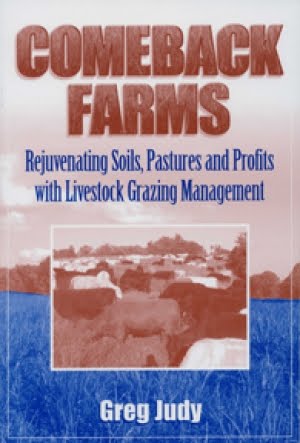
Now we are getting down to the nitty gritty ... the stuff that really has me excited as I read through this book for the second time. In chapter 22 Greg Judy introduces the idea of "Holistic Planned Grazing." And, this is where things get exciting! In think it is important that before we go any further here we define the word "Holistic" as Mr. Judy is using it (because I have a feeling it is one of those words with multiple definitions). He writes, "The term 'Holistic' as used here means that we are managing for the health of everything. Holistic management focuses on the importance of working in sync with nature to mimic natural processes." Later he writes, "Every action and decision you make has an effect on everything in your operation."

Mr. Judy particularly focuses the operation/work of Ian Mitchell-Innes who is a South African rancher he works 14,000 acres and uses Holistic Planned Grazing to manage his farms. He grazes 4,000 to 6,000 head of cattle per day on a 100 acre paddock! Did you catch that ... 4,000 to 6,000 head and 100 acre paddocks ... that blew me away and think this is the point where I would have said, "This can't work for me," if I hadn't continued reading on. Mr. Mitchell-Innes has seen his ranch improve endlessly through his management system that focuses on using the livestock to improve everything. Oh, and Mr. Judy also is quick to point out that all the improvements that Mr. Mitchell-Innes has made on his land has come without the use of lime and fertilizer. You just have to read the chapter to get the rest, but if you can't tell ... I think it's great!

In chapter 23 Mr. Judy answers the question of how this high density grazing thing can work with numbers fewer than say ... 4,000. He has been doing mob grazing (another phrase you will see a lot) with 50 to 250 head of cattle and believes that it will work on numbers smaller than that, and I tend to agree. When he was writing this book he was mobbing up his cattle herds in densities between 100,000 and 500,000 pounds liveweight per acre and he writes the results were "dramatic". The main issue and difference between this mob grazing and Management Intensive Grazing that he used to be doing was that in the MiG system they were focusing on keeping the grass young and grazed before it went to seed. With the mob grazing they allow the grass to get older and by doing so let the root system fully rejuvenate so that as the season progress the grass can handle the weather changes better.

I could go on and on! But, I would just suggest at this point you pick up the book and read for yourself. I for one can't wait to get my cattle mobbed up once the grass starts to take hold and get growing. The benefits seem endless ...

Sunday, April 25, 2010

The First Farmer's Market ...

In less than a week we will be setting up at our first farmers market ... EVER!!! On Saturday, May 1st the Living History Farms in Urbandale, IA will be hosting their Farmer's Market preview inside the visitors center and Crooked Gap Farm will be there selling our heritage Hereford pork. If you aren't familiar with the Living History Farms it is a living history museum that features farms from different periods in Iowa's history. Because of that this market isn't like every other market in the Des Moines area and it will feature demonstrations and hands on activities for every one attending ... along with live music from time to time I hear! I think this market is a perfect fit for our farm values and my love of history.

Needless to say I'm pretty excited about this new chapter on the farm. But, at the same time I'm a bit apprehensive because this will be another first for me (I should be getting used to "firsts" on the farm). So far I have secured the correct permits and insurance along with locating a source for dry ice in town to keep everything frozen. I'm working on some business cards and information sheets to hand out at the market along with a few other displays (newspaper articles featuring the farm) and we have our canopy tent ready for when the outdoor markets begin in a couple weeks.

What am I not thinking of though? I know I'm missing lots of different stuff here because I've never done this before! So, I'm calling on the expertise of all you farmer's market vendors and consumers. What kind of things should we have when we set up and what kinds of things do you look for as a consumer?

Friday, April 23, 2010

Comeback Farms :: Chapters 20-21 Book Report

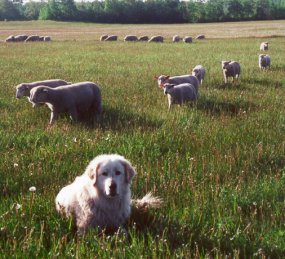
These two chapters deal specifically with livestock guardian dogs. A topic that I don't know too much about (except that we do have a Great Pyrenees), but that will be very important if I have some sheep coming to the farm this summer. Greg Judy speaks very highly of livestock guardian dogs and seems to have a pretty high rate of flock safety with their use, so I was very interested in seeing what he had to say about selection and training of a guardian dog. These two chapters didn't disappoint! I don't have time for many thoughts today, so I will just throw out some highlights from the two chapters that really stuck with me.
  • When selecting your puppy pick out one of the puppies that comes to you right away. When it comes to a guardian you don't want a timid dog.
  • As soon as they get their puppies on the farm they are put with the sheep. That is where they are fed and that is where they sleep. To get the sheep used to the dog they sometimes place them in a pen right next to the sheep so they get used to them being near.
  • Another way to bond your dog with the sheep is to place the pup in a pen (Mr. Judy uses an electro-net pen) with an old ewe and force them to bond. Then when you place the dog out with the entire flock there will already be a connection.
  • Don't let the dog bond with you. We purposefully let our dog bond with the family because we wanted a family guardian dog. But, in doing so Jack hangs out around the house most of the time protecting this area. For a livestock guardian a pat on the head each day and a "good job" is probably enough.
  • Mr. Judy made a neat little "feeding pen" on skids to allow the dogs access to a self-feeder, but keep the sheep out of the dog food. This is a really good idea!
After reading these two chapters (and re-reading them) I'm on the lookout for another dog with sheep on the horizon. This one will be a true livestock guardian dog ... not a people guardian.

Thursday, April 22, 2010

"Food, Inc." and Thoughts Afterwards

Last night "Food, Inc." played on the Iowa PBS channels (and maybe nationwide?). That is pretty interesting in and of itself, but what I found more interesting was the show that played afterwards here in Iowa. "An Iowa Journal" (this link will take you to the full episode, but you can also view clips below the main video) was featured after the film and included an interview with Craig Lamb (head of the Iowa Farm Bureau) and Neil Hamilton (Drake University Agricultural Law Center and 10-acre market gardner). Obviously a film like this would bring out a lot of opinions here in Iowa, a state that leads the nation in corn, soybean, egg, and hog production.

One of the words that kept coming up in the discussion was "choice". But, I don't think everyone agreed all of the time on what "choice" actually was. If you have 50 minutes of free time I would encourage you to check this out. I had it running in the background while I was doing some other work and found it very interesting to listen too.

If you do have time to take a listen tell me what you think ... was it an unbiased discussion? Did they pick out bits to cling on to that didn't tell the whole picture? I'm just curious what others think.

Wednesday, April 21, 2010

The Realities of this Beginning Farmer ...

In a perfect world things would go differently than the do in reality ... When I started this blog (a long time ago it seems) I was just beginning the research phase of this whole farm adventure. I was starting to pick up books and talk to people, but at that point the farm was just a dream and the land to have that dream on wasn't even on the radar. In the perfect world I would have gathered as much of that knowledge as I could and then when there was a place to farm I would have just jumped in with all of me and thrown myself at the farm until it worked! The reality of it is that I've got about one foot (mostly just a toe hold) on the farm right now.

Today is a case in point. Just last week (at least I think that's when it was) I blogged about the Greg Judy event happening in the northeast part of the state. Today was the day that it was going down and regardless of the distance and the fact that I had youth group in the evening I was going to be there ... I mean how many chances will I have to listen to Mr. Judy and I really thought attending would benefit the farm and my management of it. But, the workshop is now over and I was never there. That is the reality of the farm right now.

That picture up there on the left ... that's what my pasture looks like right now. As I mentioned the other day, warm season grasses are just that ... warm season. And, they haven't decided to take off so much yet. Also, the years in CRP and the growth of the scrub brush have left things pretty bare in spots. In the perfect world this seeding would have taken place the first spring I was on the farm ... in reality it happened on the third spring, but at least it happened!

So what do you do when the reality does not match up with the perfect world on the farm? I think you make sure your priorities are in order and you just keep going. As much as I would like this to be a sprint the reality is that it is like an ultra-run (that is something crazy people do ... think 100 miles).

Monday, April 19, 2010

Seeding Pastures

After I finally figured out how to get the no-till drill set and calibrated (at least I think I did) I was able to get going on actually getting seed into the ground. I drilled my mix (Pradel Meadow Fescue, Perennial Ryegrass, Orchard Grass, Italian Rye Grass, and Alice White Clover) Saturday afternoon and evening and did about 5 acres. It was nice to see the visible progress of slowing cover more ground and getting a start on adding some cool season grasses to the pasture. It also gave me plenty of time to observe and think as I was bumping along on the tractor. Here are some of my observations:

  • There is clover coming up in quite a few places. In fact it is the only thing that is growing on the clay that covers our septic filtration area.
  • There really was a lot of bare ground in the pasture. In some places the switchgrass stand had just become very thin and in other places the brush had gotten so think that it shaded out all the grass. That was especially true in the area where I mowed down the brush yesterday.
  • The lack of quality grass and the bare ground was kind of depressing at times.
  • I have no idea what I'm doing! Yesterday while I was taking a break from the tractor I tweeted, "Ever feel like you're doing something, but not sure if you're doing it right? I do ..." I knew that seed was leaving the drill, but if it will ever grow ... of that I'm not sure!
  • Warm season grasses are just that ... warm season. As I look at my pasture I don't see the lush green that surrounds the farms around me ... oh for some lush and thick grass. It will come in time.
  • I'm excited about the possibilities of mob grazing ... if ever there was a farm that could use some good microbe management this is it!
  • Now ... I'm praying for grass to grow!

Saturday, April 17, 2010

Comeback Farms :: Chapters 17-19 Book Report

Chapters 17, 18, and 19 of "Comeback Farms," by Greg Judy are three very encouraging chapters that each deal with topics that are very similar, yet different at the same time. In chapter 17 Mr. Judy writes about the money side of the hair sheep component on his farm. He sells his lambs both at the local livestock auction and direct to customers and believes that both can be profitable with no-input grassfed hair sheep ... although it is much more profitable when he sells directly to the customer. The figures he gives for the financial side of sheep in this chapter are pretty encouraging and make me feel like running out and getting some right away (even though I understand everything doesn't go by the book all the time). But, I think the profit possibilities are real and I love the comparatively quick turnaround that lamb offer. This is not a two-year proposition like grassfed beef, so your money won't be tied up quite as long.

Let me just add this on the topic of hair sheep ... there is so much that I'm learning now that I wish I would have learned before I got going! I believe if I was starting over now and using the experience and knowledge I have gained that I would have started with pigs and sheep and then added just a couple cows. The pigs and sheep offer such a quicker path to income and have a much lower starting cost! So, if you haven't started yet and livestock is your dream ... think about that.

In chapter 18 Mr. Judy talks about brush goats as a piece of the puzzle on his rented farms. I'm not adding goats (unless it's just a goat that I can make faint), but I can see how they would be a nice addition in his situations. He only keeps about 20 goats on his farms and he does not use them within his mob grazing system. They are allowed to take care of the brush clean up and the provide a little meat for sale each year. I would say that they are just another "tool" in his management system.

On the other hand though, chapter 19 is about Tamworth pigs and that topic does get me excited. I will admit that I do love the Herefords so far, but every time I read about Tamworths I get excited and want to find some! It's things like this quote that get me excited,
"It is a true treat to watch them graze in the pasture. They walk along at a steady pace with their heads bobbing just enough to take in the top 2-3" of clover or whatever their target may be. They graze at lightning speed, just taking the best tender part of the plant as their snout passes over it."
Yep, I need to find some Tamworths! I have really enjoyed having the pigs on the farm and think that they are a great addition to any pasture based system.

Friday, April 16, 2010

First Time for Everything ...

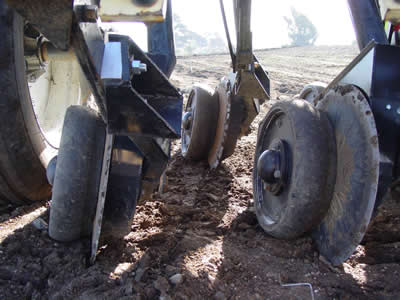
It seems like every week I'm doing something for the first time on the farm ... and all too often I'm trying to figure out how to do that thing by myself. That is what is going on today. I'm trying to figure out just how this Truax no-till grass drill works. I'm starting to get it figured out and I have a plan, but I'm worried about getting the settings right for the pounds per acre that I want. I do have the manual, but it doesn't seem like it explains as much as I would like it too. Such is farm life ...

So, with that being said ... I'm going to head out and try to defeat this thing and get my pasture seeded!

Tuesday, April 13, 2010

Follow the Crooked Gap

Along with the new name we are rolling out a few other things for the farm ... or at least rebranding them I guess. You can now become a fan of Crooked Gap Farm on Facebook (and I hope you do). But, if that wasn't enough for you then you can now follow me (and Crooked Gap Farm) on Twitter. If you don't know what Twitter is ... well ... it's basically a quick way to follow the daily happenings of someone. I'll be "tweeting" (I guess that is a verb now) about the various things going on at the farm and all that I'm doing for the farm. I hope you follow along on Twitter ... if you look to the right you may have noticed that I've been "tweeting" for a while now. I just wanted to give it a test drive before I made it official.

Now, I must admit that there was a time when I thought all of this social media stuff (Facebook, Twitter, etc.) was a bit too much. But, as I think about the possibilities I have to admit that I'm kind of excited about these new accounts. It really fits in quite well with the transparency and connections that I want this farm to be about. I really do want customers and others to know the daily ins and outs of the farm ... whether they are mundane or exciting. I want people to know how the weather is affecting things, what it takes to start a farm and continue everything else, and the tasks that go on each day.

I guess it was a natural progression really. First the blog ... then a Facebook page ... and finally a Twitter account that I can post to no matter where I am on the farm (via my cellphone). So, feel free to join us on Facebook and follow me on Twitter!!

Monday, April 12, 2010

Crooked Gap :: A Heritage Farm

For the past few months (and probably longer) I've been fighting with the idea of a new farm name. I Absolutely loved the Stoneyfield name, but there was just too much confusion from a name recognition standpoint, so a new name was needed. The problem was finding just the right name that I loved. Eventually I realized that I just had to go with something and stick with it! So, after months of thinking and trying on several different names for size it's settled. The new farm name is ...

... Crooked Gap ...

As you can see from the logo we've also added a new tagline ("A Heritage Farm") that fits well with the farm and the values of the farm. There is just so much to love about the heritage breeds because they were livestock breeds that were developed to thrive in low input situations and pass on hardy genetics to their offspring. With that in mind I'm particularly focusing on the the older breeds that fit well into the this farms system of management. Plus ... it gives me a good excuse to focus in on my love of history.

You may be wondering about the name though ... Simply put, the farm is just off of what is locally called "the crooked road to Melcher," so I thought it would be a fitting name for a farm. And the "Gap" portion of the name helps tie everything back to history. You may have heard of some of the famous "gaps" that played an important part in our nations growth and expansion. One of those famous "gaps" is Cumberland Gap which was the main highway for settlement west of the Appalachian Mountains.

All of that local lingo and those historical connections led to Crooked Gap. On top of all that though is the fact that I just like the name. I think it's unique and fun and fitting! Plus, I don't think we'll be having to do a name change anytime soon ;)

Saturday, April 10, 2010

Greg Judy in Iowa :: April 21, 2010

What perfect timing! As I'm making my way through Greg Judy's book, "Comeback Farms" (for the second time) ... he is coming to Iowa. On Wednesday, April 21st from 9:00 AM until 5:00 PM he will be in Calmar, Iowa at the Northeast Iowa Dairy Center. As you can see from the flyer below he will be covering quite a large number of topics (in a short amount of time) and there will be a lunch. If you are a Practical Farmers of Iowa member this is a free event ($25 if you're not a member).

Even though this event is almost four hours away I plan on attending as much as I can. I have to be back in town by 6:00 PM, so I won't get it all in. Nevertheless, I think it's worth it and I can't wait! If you are in the general area I hope you will join me at the event.


Friday, April 09, 2010

Comeback Farms :: Chapters 15-16 Book Report

In chapter fifteen Greg Judy writes about the flock of hair sheep he began with and how he suggests going about beginning your own herd. On his farm they started out with purebred St. Croix hair sheep from a small herd that had never been wormed. The gentleman that Mr. Judy purchased his sheep from had been building his parasite resistant flock for some time and had already gone through the struggle of severe culling and loss of sheep to build the genetics he needed. I've got to admit that I think that is a great way to go ... especially if you are going to start out with a small flock like I would like to.

The small flock of St. Croix's was not all that Mr. Judy wanted for his farm. In fact he mentioned that he would like to have a flock of 500 ewes. After searching all over for more St. Croix hair sheep he found that they were hard to come by ... or as much as $500 for ewe lambs. As you might guess that would be a bit too much to pay if you wanted to build a large production flock, so he moved on to "Plan B". That plan involved buying a flock of Barbados hair sheep. What they are doing now on his farm is using the St. Croix rams to breed to the Barbados ewes in hopes of building up their parasite resistant flock. It sounds like a good idea ...

Along with parasite resistance Mr. Judy has a few other goals for the type of sheep that are part of his flock. His goal, "is to build a flock that needs no wormer, no lambing assistance, no feed, no hay, no shelter. They must have extreme flocking instinct, lamb on pasture, get no shots of any kind, wean their own lambs, shed off every spring, lamb every year, require no hoof trimming, and have good mothering instincts." As you can see that is a pretty lofty goal, but once it is reached they will have a flock that fits perfectly into their system and that uses very few inputs!

Chapter sixteen deals with developing the parasite-resistant flock. I can sum it up pretty quickly. Cull ruthlessly ... get sheep from your area ... find sheep being raised the way you want to raise them ... and ... cull ruthlessly! Of course he adds a bit more, but I think that's a good summery.

Thursday, April 08, 2010

Comeback Farms :: Chapters 13-14 Book Report

What has been going on since I blogged last? Rain, a bit of rain, rain, wind, heat, sun, rain, a little more rain, hail (and damage to the roof), and more rain. It has been bleh ... needless to say I've been out slogging through the mud and trying to tie up other loose ends as the farmer's market season draws near. But, I have also been finishing up "Comeback Farms" by Greg Judy and thinking about putting some of those thoughts into practice on the farm. These two chapters deal with multi-species grazing ... specifically sheep ... specifically hair sheep!

In chapter thirteen Mr. Judy talks about the benefits of multi-species grazing. He says that he had been dragging his feet for years because of all the fears he had about adding sheep or other animals. What I really appreciate is that he takes each one of the fears that he had and then shares how they worked through them on his farm. I thought I would share a few that really hit home with me from this chapter.

Extra Fencing :: He uses 5 wires of hi-tensile electric on the perimeters and then 4 wires for the interior paddock divisions. I'm pretty close to set in that regard.

Worming Sheep :: They are focused on building a 100% parasite-resistant flock of sheep on their farm, so they cull for that and have found quite a bit of success it seems.

Sheep Need Shelter :: Mr. Judy provides no shelter for his sheep on pasture and they lamb out on pasture as well.

This quote from the chapter gives a good perspective on the benefits of multi-species grazing, "What was once nuisance plants, weeds, brush, etc., become food for your animals. The cattle eat the grass and legumes. Sheep go after the broadleaf weeds, blackberry and some grass." Reading this kind of stuff (and the resolutions to the perceived problems) gets me really excited about the possibility of adding sheep!

Chapter fourteen deals specifically with building fence for sheep and goats. It is nice to have some details of what works on their farm. I especially like the description and pictures of the five strand gates he makes using polywire tape. There are two gates that are at the bottom of the pasture on the farm and this is exactly the kind of gate I was thinking about building. Now I have an idea of how to do it!

As you can tell (and will tell as I cover the next few chapters) I'm excited about the possibilities of hair sheep ... there will be more on that to come.

Friday, April 02, 2010

Running...

This has been one of those weeks where I just feel like I have been running, but not accomplishing very much. It has been go ... go ... go, but not a lot of huge visible results. I guess there will be weeks like that though.

One thing that I did find today was this dandelion (it's not a weed) pictured above. It's the first one that I've seen this year and it was nice to see something so bright and beautiful on a cloudy day. It did get me thinking about dandelions as a forage though ... here is an article I found online. The nice thing about dandelions compared to the other forages I'm going to plant this spring ... I don't have to purchase seed for them and I'm sure they will eventually show up!

Here is a tidbit from the article by Christoph E. Weder Ph.D.:
"Well what does it all add up to? What is the impact of dandelions on a forage stand? For four consecutive years, the same researchers from the University of Wisconsin studied the effects of dandelions in cut hay. Their findings were interesting. First, dandelions did not normally decrease the total biomass of the forage stand. In fact under well managed pastures they added to the biomass. As for feed quality, they found that dandelions had protein values many times in excess of 18%. The only downfall was that they had higher moisture contents than other species in the stand and could affect dry down in haying situations."

Tuesday, March 30, 2010

Comeback Farms :: Chapters 12 Book Report

Greg Judy does not use a tractor (at least that's what it sounds like in this book). He purchases all the hay he needs and moves it around with his truck and a bale trailer. He uses this set up to move the bale around and to unroll it. Besides that it sounds like he uses his ATV quite a bit for everything else. So, the topic of chapter 12 seems to be right up his ally. In this chapter he talks about reducing his fuel consumption and letting the animals do the work. I think I need to agree with him!

Just yesterday I looked out and saw all this brush sticking up in the pasture that I'm going to reseed in the next week or two. I decided that I need to go out there and knock those down with the mower (you have to realize that these are basically just sticks coming out of the ground because the cows striped them bare last summer). So, I fired up the tractor and hooked up my 5 foot brush hog. After a couple of passes I realized how wasteful this was really going to be. It wasted my time and my money and all to knock down a few sticks! There are a couple patches that I need to knock down with a saw, but really I don't think they will hamper the no-till drill any and once we get out there grazing I'm sure they will disappear under some cattle pressure.

This all leads me to what is really on my mind right now ... pasture seeding (I know that was a short book report, but it was the end of section one of the book so it was a good break). I am now on the list to use the no-till drill that is housed at our County Park (funds for it coming from multiple sources) and I need to get my pasture seeding mixes nailed down.

Last week I mentioned the Grassfed Webinar that I listened to online and I was very excited to see the "pro" (in this case Doug Gunnink) offer a good pasture mix for Iowa that he likes to see people use. Here is the mix he suggested:
  • 35% Pradel Meadow Fescue
  • 35% BG 24T Perennial Ryegrass
  • 13% Baraula Orchardgrass
  • 10% Green Spirit Italian Ryegrass
  • 7% Alice White Clover
I think all of these varieties are from the Barenbrug company and I'm not sure yet if I will be able to find them in my area. So, I was wondering if anyone out there had any suggestions for pasture mixes. Mr. Gunnink suggested seeding that mix at 25 lbs. per acre. I'm going to hit part of my pasture this year and then see what happens next year. Thanks for any thoughts or help!

Monday, March 29, 2010

Comeback Farms :: Chapters 7-11 Book Report

I have to admit that while I'm writing my book report for chapters 7-11 I'm actually reading chapter 26! Needless to say, I'm really flying through this book and I'm really enjoying it. I've combined these chapters together in a bigger chunk because only a couple of them really hit home with me. Not that it's not good information, but rather it is stuff that doesn't exactly fit my situation ... or it's just a funny story (as is the case with chapter 9 about the rodeo cattle). For example, chapter 7 deals with Greg Judy's shift from stocker cattle to dry cows. It makes sense because their nutritional requirements are lower, but with a lack of cattle experience I don't really want to learn on other peoples dry cows. If you have the experience then I suggest you think about it!

Chapter 8 is a great read because in this chapter Mr. Judy shares a lot of the equipment (and brands) that he uses. After reading though it I was feeling pretty good about most of my purchases because he strongly recommended Stafix fece chargers (have one), O'Briens geared reels (have three), O'Briens tread in posts (have lots), and Powerflex posts (not sure how many I have, but I have them). While I haven't had as much experience with other products out there like he has I would have no problem recommending all of those names above. And, it was really nice to see him share about the equipment he uses because that is one thing I'm always wondering when I read a book or an article.

Chapters 10 and 11 gave me quite a bit to think about ... for the future. These two chapters covered leases, both losing leases and keeping leases. His previous book, "No Risk Ranching," goes deeper into the leasing issue, but these two chapters did enough to get me thinking about the idea. I feel like if I had a bit more livestock knowledge going into this farm deal I would have been much better off going the leased route (and probably would have regardless of my knowledge), but I also think leasing could be something I look at in the future.

One thing that keeps popping in my mind when I read about that low cost leased ground that he is always talking about is this ... CRP ground. I don't know what it is like anywhere else, but around here there is a lot of marginal pasture ground or bad pasture ground that has just been placed in CRP (Conservation Reserve Program) and most of the time I can't compete with those payments. I guess when it comes time to look for leased land I just need to start contacting land owners and see if they have it in the program or not!

Saturday, March 27, 2010

Where is the Bottleneck?

Whether you call it a slaughterhouse, abattoir, or processing facility the truth is that it seems it is getting more and more difficult to find one close by that meets the standards of the farmer and the customer. In thirty mile radius we have four or five facilities, but only two are state inspected (meaning they can process meat to sell by the cut within state lines) and none are federally inspected (these facilities can process meat to sell nationwide). If you would like to process chickens for sale then you have to go even further. We've had a few problems so far, but we have also had some processing facilities that were willing to work with us.

But, it seems that I don't have it as bad as some people do in other parts of the country. I came across this article from The New York Times titled, "Push to Eat Local Food is Hampered by Shortage". In the article the expose some of the difficulties farmers and consumers alike are facing to get the food that they want. It seems that the ability for local meats production is there on the farmers end and the demand is there on the consumers end, but the problem is getting the products processed and into the hands of the consumers.

This quote from the article sums up the problem the best I think, "According to the United States Department of Agriculture, the number of slaughterhouses nationwide declined from 1,211 in 1992 to 809 in 2008, while the number of small farmers has increased by 108,000 in the past five years." I don't know if that is counting all types of facilities (exempt, state, and federal), but regardless it shows just how few processors there are out there right now for small-scale farmers.

I think there are many reasons that we are losing these facilities, but a couple that stuck out in the article for me were the lack of skilled employees and the regulations. Agricultural Secretary Vilsack was quoted in the article saying, "It’s pretty clear there needs to be attention paid to this..." I hope that attention is paid soon (I kind of doubt it will be) and that actual help will be given to those that currently run processing facilities and those that want to open them (help includes things like making the regulations bearable).

Thursday, March 25, 2010

Comeback Farms :: Chapters 4-6 Book Report

In chapter four Greg Judy talks a lot about the importance of using purchased hay to rebuild your pastures. He uses a bale un-roller that he pulls behind his truck to spread out the hay and the nutrients (along with seeds). There is also a good picture and a nice description of us bale un-roller in this chapter ... if I was handy it looks like it would be pretty easy to build. I'm still trying to wrap my mind the whole bale un-rolling process and how it would work in the winter and the muddy times on our farm, but I do love the idea. Another thing I have questions about is if there is much hay wasted on the ground ... although I'm guessing Mr. Judy has enough cattle to clean up quite a bit each day instead of just laying down on it. One last thing from this chapter ... I sure wish I could by grass hay for $15-20 a bale like he mentions! Grass hay around here is $45 (for pretty bad stuff) and up. Of course all hay is at a premium this year because of the weather.

I can sum up chapter five in just a few words. When there is a drought don't graze your grass to the ground. In Mr. Judy's words, "Resist Opening Gates During Drought" (that is the chapter title). This is a reminder that I've seen in quite a few places and I think it is sinking in for me. Hopefully we don't have a drought any time soon and hopefully if we do I remember the good advice! The problem with opening the gates he writes is that you are giving up on your grass and hurting it not just for that season, but in the future as well.

Controlled burning is the topic of the sixth chapter and I have to admit that this is something I will probably never mess with. We don't have a lot of acreage right now, our house is in the middle of it, and there is plenty of conflicting opinions out there on the merits of controlled burning. Mr. Judy has burned in the past, but he writes that he has changed his mind recently because of the harm that it can do above ground and below ground. I guess burning can damage the roots all the way down to three feet.

If you read this book (and I think you should) you will find that Mr. Judy shares a lot of stories throughout. I love that personal touch because it makes him seem like a grazing human instead of a grazing superman! Although he is light years ahead of me he still is learning and making mistakes.

Wednesday, March 24, 2010

Grassfed Farminar

Last night was the final installment of the Practical Farmers of Iowa "Fishbowl Webinar" series that paired a beginning farmer with an experienced farm. Each presenter (the beginner and the old hand) had some time to share a little bit about their operation (or proposed operation) and then the beginner, along with those viewing the webinar, asked questions. I have watched a few of these after the fact because I haven't been by a high speed connection in the evenings when the happen, but since it dealt with grassfed beef last night I wanted to watch it live. I'm glad I did because there was some good stuff!

You can check out this link to watch the archived webinar (and this one to check out the other topics covered this winter). Let me just say this though if you take the time to watch the archive. The first part is great with Dave the beginning farmer and the last section is great with Doug the experienced grass finishing farmer. But, in the middle there were some technical difficulties that lead to "this guy" filling in and not sounding very intelligent because I'm just a beginning farmer too!

Nevertheless, these farminars/webinars are a great resource and I encourage you to check them out.

Tuesday, March 23, 2010

Another ... Little Calf

Calf number two came yesterday afternoon with no problems (this seems to be the trend with Dexters from what I've experienced and heard). This little girl (yep, it is a heifer) picked a great day to be born with a temperature in the mid 50's and plenty of sun. In fact there was even some dry ground for them to get out on. It was nice to watch this little girl bound around the pasture so quickly after she was born ... it never ceases to amaze me how quickly they get going.

I've include the picture here because people often ask about the size of our Dexters. As you can see the newest calf is just a bit over knee high and probably weighs between 20 and 30 pounds (I'm just guessing). The black cow in the background is the mother and this was her second calf. She is pretty much average sized for Dexters I would say ... maybe on the slightly taller end of the scale. We have a couple cows bigger and a couple cows that are smaller. This calf was from a smaller bull, but I would say that she is pretty much average in her size and weight compared to the other calves we have had.

I'm expecting four or five more calves this spring. It seems like I should have a better idea of how many calves we will have, but there is one cow that hasn't had a calf on our farm yet and I think it's been a while since she had a cow period. We bought her with a group of cows, but if she doesn't calve this year she is gone ... I gave her a pass last year because of some issues we had moving animals around and exposing them to the bull.

Hopefully we'll throw a few more bull calves as the calving progresses so we can start building some beef inventory!

Monday, March 22, 2010

Comeback Farms :: Chapters 1-3 Book Report

Well, after the suggestions of many I'm finally reading "Comeback Farms" by Greg Judy. I know that people have been telling me for months now that I need to read it ... and after getting just a few pages in I know why they have been telling me to read it! This book seems to be full of just the type of information that I needed a couple of summers ago, but since I didn't have it back then I'm trying to read through it as quickly as possible now ... and then I'll read through it again! As I have with some of the other books I've read I will do book reports as I make my way through. Mr. Judy writes short chapters though (not a bad thing), so each report will cover a few chapters.

"Let's assume you are starting from scratch with no land. That's actually not a bad place to start." Those are the opening two sentences in chapter one and as I read them I though ... hmm ... wish I could have read this book before I had any land or livestock! But, that's not where I am now so I guess I will just have to learn how to grow from where I am. In this chapter Mr. Judy talks about the changes he had to make in his approach to the farm and his pastures in general, and of course the important attitude shift that went with that change. As I read through the first chapter I was struck at how important it really is to find farmers that are doing things they way you would like to do them and then learn from them! I will admit that seeking out those people has not been one of my strong suits and that I need to seek out their help!

In the second and third chapters the book gives a brief overview on some of the ways that you can turn around poor pastures by using grazing management and the cows to do the work. I think one of the things that I catch myself thinking about is how I can get to my ideal the quickest. As I read through these two chapters I was reminded that I can use the livestock to reach the ideal and that it will probably work out better that way. It is very encouraging to hear Mr. Judy's first hand experiences (both the good and the bad) and I will admit that I'm experiencing a bit of excitement about the farm right now that might have been hidden a bit during the winter.

If you haven't read this book I encourage you to check it out and follow along with the book reports because I think it will be a great read. If you have read the book ... I would love to hear about some of the things that stuck with you as your read!

Saturday, March 20, 2010

Snow :: On the First Day of Spring

As you can see from the calendar today is the first day of spring. As you can see from the picture above that doesn't really mean anything in southern Iowa. The snow today just serves to make things a little more exciting and I guess to make me even more anxious for sun and temps in the 60's. There is a plus side though ... you might notice in the the picture that the snow has driven the buffalo out of their spots down in the timber and up onto the pasture. It sure is nice to wake up in the morning and look out the window at a small herd of buffalo!

In other snow related news, it is supposed to hit 37ºF today and all the way up to 59ºF on Tuesday with the sun making an appearance on a couple of the days. I think that means that this snow will quickly give way to a bit more mud. I guess it is nice that we were starting to dry up just a little bit before this last round! Now, if I could just get some sort of guarantee that this would be the last snow of the season.


Wednesday, March 17, 2010

Are Small Farms a Threat?

Last week this article from the Des Moines Register came across the Practical Farmers of Iowa Listserv. It is an interesting read about new farm policies coming from the USDA and the current national administration. I thought that this quote summed up one side of the article very well,
"USDA shifted on me," said Tim Burrack, a farmer near Arlington in northeast Iowa who is chairman of the Iowa Corn Promotion Board. He said the Obama administration's local-foods initiative, dubbed "Know Your Farmer, Know Your Food," to promote small-scale agriculture, will drive up food costs because large farms are more efficient."
There is some information from both sides of the coin in the article, but I think the quote from Angela Jackson (a small-scale farmer from northwest Iowa who supplies fresh produce to stores and customers) who is featured in the article. She says, "The consumer is driving this."

While I'm not sure if the consumer is driving all of this (it seems that lately policy isn't always inline with the opinion of the general population) I do believe that the consumer is beginning to make the largest impact and that their voice is being heard. This is an interesting place that we have ourselves in with farmers competing with farmers because they have different ways of doing what are/can be/used to be the same thing.

As I read through an article like this one I keep thinking back to the quotes from the "conventional farmers" in movies such as "King Corn" and "Food, Inc." In both of those films the conventional farmers have said that they aren't trying to hurt anyone or anything ... and I agree with them. They say they are just doing what the consumer demands ... and I agree with that! Maybe we just need to keep counting the votes of the consumers (thank you for all that support our farm!).

What do you think? I would love to hear your thoughts on the subjects laid out in the article.

Tuesday, March 16, 2010

Am I Becoming a Food Snob?

When I wrote for Epicurious I often wondered what it would be like to distinguish the little nuances of food like their writers did. For me food just tasted good or I didn't like it ... and if I'm going to be completely truthful the list of food that I didn't like (which holds many vegetables and other healthy things) vastly outweighed the list of food that tasted good. Things really haven't changed that much since I started farming, but I do think I am becoming a bit of a food snob. And I kind of like it!

Last weekend we had a family gathering at my Uncles house (which is always a good time ... especially when I bring home a chicken nest box). Like most family events food was involved and we grazed through much of the afternoon and evening on all sorts of stuff. But, the main course was a nice and big spiral sliced glazed ham. This is the kind of thing that I drooled over before I began the farm and I was pretty excited about it.

Don't get me wrong ... it tasted good and everyone was raving about how good it was, but to me it just didn't live up to my expectations. I couldn't really put a finger on it (my palate isn't that well defined yet ... too much fast food from the past messing with it), but it just wasn't as tasting as what I have raised on the farm.

I think the taste difference comes from a lot of different things. The breeding could make a difference, the processing could make a difference, the curing will make a difference, the feed ration could make a difference, and probably a lot of other things. What may make the biggest difference some think (and I might be starting to agree more and more) is just the way the hogs were raised. Maybe the life of a pig does make a difference on the final product? Maybe the sun and the fresh air does matter? Just maybe ...

Either way I know one thing ... I really enjoy eating the pork I raise on the farm!

Wednesday, March 10, 2010

A River Runs Through It ...

In the movie I think the river ran through Montana and was full of trout. Here the river runs through my pasture and down into the ravine flowing through the woods ... plus, I'm pretty sure there are no trout! Right now it's a pretty impressive sight with it streaming down from the hill top and making this neat little waterfall. Also, at this time of year I don't think it's doing much erosion damage because there is still some frost in the ground. Come spring and summer though when the water comes tumbling down like this though it usually takes a quite a bit of dirt with it. In fact last summer I think we lost quite a few feet where the little waterfall is.

I guess this should probably be added to my list of summer projects! Obviously this won't be a little project that I can work on for a week and call good. In reality it will be a several year thing because part of the solution will have to be building up the soils so that they can store more water in the spring and summer (right now runoff is going to happen no matter what). As far as other options go I'm going to have to do some exploring. I think there would be some grasses that we could plant to help with this area and the rut that it is starting to create. Also, I've been filling it up with brush cut from other areas.

One thing is for sure ... I could make a nice little pond down there. But, I don't think it would be deep enough for trout. Maybe just some crappie and such ...

Tuesday, March 09, 2010

Back in the Chainsaw Saddle

Yesterday morning I was finally able to get my big chain saw (Stihl 034AV) into a shop for a repair and they were able fix me up really quick. It was just a broken pawl on the starter and then some missing screws and I was back in business. That meant I could put away the bow saw for now and get some firewood cut before the rains came ... yes, you read that correctly! At least for the time being we have transitioned from snow into rain and that means the snow is making an exit (although there was plenty of it in the woods today).

Because of the melting snow, the rain, and the quickly vanishing frost in the ground I'm relegated to staying on top of the hill and trying to never face downhill. The thing is that there are no trees on top of the hill, so what I end up doing is walking down and cutting up long lengths of wood to drag out and then cut up into fire wood. It's more work, but not as much work as it would be if I got the tractor stuck in the mud ... again!

No matter what the weather is like though I always make sure to take a moment to settle down in the woods and take it all in. Yesterday I was down cutting in the very bottom of the wooded hollow near the mostly intermittent creek (although it was really rushing today). It's pretty neat down there this time of year because all of the undergrowth isn't clogging up the view so I sat down to take it all in (oddly enough sitting on a hollow log ... in the hollow). Soon though everything will change and green will replace the snow covered ground and the canopy of empty trees.

Hopefully I will sit on a hollow log and enjoy that as well. For now I'm just glad the chainsaw is running again ... and if you have a Stihl 009 that needs some parts, just let me know (mine bit the dust and is now just a parts saw).

Monday, March 08, 2010

Muddy Time :: Again

Spring may not be here until March 20th, but the mud tells me it is coming soon. As for this blog ... I think this quote will become at least a year tradition. "March is a green muddy month down below, some folks like it ... farmers mostly." (of course that is Bear Claw Crislap from "Jeremiah Johnson ... one of my favorites) That quote just always seems fitting for this time of year. Right now, as you can see from the picture, we just have the mud. Hopefully soon we will have the green to go along with it. I do know one thing though ... this farmer will take mud right now. I'm not saying that I like mud, but I will grudgingly admit that it means dry ground may be coming soon.

Mud does present it's fair share of challenges though. Just last night I had the pleasure of loading a pig for the processor (at 9:15 PM). Things went surprisingly well considering how dark it was ... and how muddy it was. I was able to get the trailer hooked up, the pig loaded and the trailer out of the mud in 45 minutes. Of course I'm pretty sure I will have to level out some ruts at sometime this spring and plant some new grass there ... oh for lots and lots of gravel!

Once I made it back in the house I decided that I needed to add another thing to my list of possible projects. That is to make a centralized loading area in the winter lot area (I've decided the pigs and the cattle are going to live in what we'll call a "sacrificial area" next year. In the winter neither of them use up much space, and then everything will be close to the feed, water, and shelter areas. Plus, then I would have the benefit of making one nice graveled loading area so that I can load without getting stuck all year long.

This would mean that I would have to do some advance planning to bring animals up towards the loading area when it is close to loading day, but I think that is a small amount of work compared to tearing up the whole farm or getting vehicles stuck in awkward places. It would also give me an excuse to have them bring out enough gravel to put down in front of the shed ...

One more thing about the farm names again ... Muddy Hole Farm seems to be pretty fitting now ;)

Friday, March 05, 2010

Spring Thaw :: Many Projects

Since I have a tendency to become overwhelmed by the projects on my plate I thought it would be a good idea to get a jump on the planning and map them out so I have obtainable goals for this spring/summer/fall. There are quite a few things that need to get done and just as many or more that I would like to get done. So, here is what I was thinking ... I have decent idea of some of the most important projects, but I thought I could list them out and you all could throw out ideas on the order I should attack things. Some things will be obvious because they have to be done first before other things can take place, but some other things ... Let's just say I always appreciate all the help I can get!

Here is the list as it stands now...
  1. Cut down small grove of thorny trees that have popped up in the middle of the pasture and plow up that area for pasture planting (they are about an inch think or more).
  2. No-till drill in a pasture mix throughout the main pasture areas.
  3. Run water and electricity out the the new shed (the extension cord from the back of the house works, but isn't ideal.
  4. Put up permanent high tensile fence around the homestead area.
  5. Plant trees around the homestead (hardwoods and pines).
  6. Install a frost-free automatic cattle waterer for the winter lot.
  7. Cut lanes through the woods to setup electric fence for pig paddocks.
  8. Clean out area in the storage section of our house building for a chicken brooder (just a few chicks).
  9. Build a mobile chicken coop to follow the cattle out on pasture.
  10. Build three more pig huts (various designs to see what I like best).
  11. Plant a windbreak on the west side of the winter lot for the cattle (and probably the pigs next year).
  12. Gather wood for next winter (I understand that will be an all year thing and it really has already started).
  13. Get all my hay on the farm before fall (try to buy extra hay out of the field as opposed to all winter long).
  14. Clean out and compost the deep-bedding from the cattle shed.
  15. Put up gutters.
  16. Prep the garden and plow/disc the current pig area for this years sweet corn (this will be an as soon as possible project understandably).
  17. Build a portable loose mineral feeder and water cart.
  18. Gather all the materials needed to set-up at a farmers market (coolers, signs, table, tent, etc.)
That's my 5-minute list (it took me 5 minutes to put it together). How would your rate the priority? Any thoughts on what to add (if you know much about the farm)?

**As a side note ... Rich, that is a picture of my smallest cow at the hay ring. It's a normal hay ring so I would say maybe 4 feet tall or so ... You can tell she is small. I'll try to get some pictures of me standing next to the bigger ones, but they really aren't much bigger.

Thursday, March 04, 2010

Big River :: A King Corn Companion

Thankfully the "King Corn" guys decided not to stop there and decided to make a companion piece to their hit documentary. Their latest offering is called "Big River" and is billed as a companion or continuation of the "King Corn" story. There have been screenings for awhile now and according to their website (check out the link) there are quite a few coming up. For all you Iowans you can catch them in Des Moines on March 23rd and in Ames on March 24th. In fact the film will be screening all over the place in March and April ... even in Alaska!

I have had the opportunity to screen the film and I have to say that it lived up to my expectations as far as film production and research goes. Here are some of my thoughts after watching it six or seven times ...
  • After watching/hearing about the floods a couple years ago in Iowa they began to realize that the story of their acre of corn didn't end with just where the food went. Because all of the chemicals they used and put on the ground traveled as well and made their presence felt ... for quite a long ways it seems.
  • I appreciate the fact that they are not afraid to get all sides of the story and are willing to go and talk to anyone that will share with them. In this film the talked with conventional agriculture supporters, farmers, scientists, researchers, chemical producers, wanter plant managers, fisherman, and others. This approach was one of the reasons I appreciated "King Corn" so much and I'm glad to see they continued it in this film.
  • A little of 50% of this movie takes place in Iowa, but then ends up way down in the Gulf of Mexico. It really made me think about how far reaching our impacts are when it comes to agriculture ... especially when we have so much in our state.
  • When they do make it down to the Gulf and talk to some fishermen it seems that both the fishermen and the farmer are having a difficult time coming up with the answer to the problem. The chemicals and other amendments used up in Iowa keep food prices low, but at the same time they impact local economies hundreds of miles away. What is a guy to do?
  • One last thing ... An overriding theme that I came away with was that everyone has a hand in this. Not just the farmers. One of the talking heads reminded us that the farmers are not bad people spraying stuff in order to make other peoples lives difficult, they are just doing what is required by society right now.
My overall opinion? I Loved It. The downside? It was only 25 minutes! What gives "King Corn" guys ... I wanted more :)

Wednesday, March 03, 2010

Snow Bull and Other Quick Hits ...

Since the temperatures have been slowly coming out of the single digits above and below zero I have been carrying a camera around with me a lot more and I have enjoyed taking many pictures. The above picture is one I took of our bull Sundance the other morning as he was on his way back to the shed from the water tank. It's a morning ritual for the herd (and myself) to water at the tank. I hook up the hose and fill it up while the cows come over and drink. Then I have to unhook and drain the hose ... I'll be glad when I don't have to drain the hose any more!

Anyways, I think he is looking pretty nice in the morning sun. Now ... for the quick hits. This winter the Practical Farmers of Iowa are continuing their "Farminar/Webinar" series with all sorts of great topics that you can get in on. I've been able to catch some of them live, but they also record them and put them up on the website. Here are some links.

#1 :: Next Generation Farminars - This is a series of eight farminars dealing with everything from whole farm planning to financing a farm operation. It was specifically put together for beginning farmers or transition farmers. Check out the link above for the whole series.

#2 :: Winter Farminar Series - The winter series has a variety of topics dealing with soil, vegetables, poultry, and so much more. I've really enjoyed the one on pastured poultry and I'm looking forward to the farminar on grass-fed beef production. Not all of these farminars have taken place yet, so you can check out the link and get in on it live to take full advantage of the presenters knowledge.

#3 :: Niche Pork Webinar - Finally, I've mentioned this one before but I enjoyed these so much I thought I would mention it again! Lots of good information from a variety of niche pork farmers ... in fact I think I'll watch one again soon.

Also, if you are looking for all sorts of other resources check out the Resources Page on the Practical Farmers of Iowa website.


Tuesday, March 02, 2010

Two Stihl Saws :: Broken

The sun finally came out and it was a relatively warm (hey, anything above freezing is warm) day for cutting wood. The tractor was successfully making it around without getting stuck, I had found some nice dead and standing locust, there was new gas (it was correctly mixed), and I was actually accomplishing something. All was going well until ... until ... until the saw gurgled a bit and then suddenly locked up! Now I can't even pull the rope out, but the chain still moves freely. Alas, I'm no saw mechanic so this one will be going to the shop (the Amish chainsaw shop that is).

But, that only accounts for the little saw being broken. The big saw broke a couple weeks ago and I just haven't done the repair yet. That one seems to be a simple fix because it is just missing a few screws on the outside I believe, but I'll have the shop check it out to make sure. Hopefully it gets going soon because I would rather cut with the big saw anyways!

The moral of the story :: One saw is nice ... two is way better in case one breaks ... and, it might not be a bad idea to have a hand saw around when chainsaw one and chainsaw two breaks. This is especially true when you rely on the saws for creating heat for the house. Luckily I was able to cut a bit before the break so I have some wood set back ... of course it is the bigger stuff ... where is that axe! It doesn't ever go like it is supposed to it seems, but I will press on.

Monday, March 01, 2010

I Will Call You Vindicator ...

Back when I was a kid and my dad had pigs in every building that could possibly contain them on the farm we had a boar for a short while. I'm not really sure why we had it, I just remember having him ... thinking he was HUGE ... and then that he was gone. His name was Vindicator and I have always thought that was the perfect name for a board. In fact I like it so much so that it just may become the "boar name" for the farm (regardless of how many boars we have over the years). Naming our new boar is even more fitting though because of where the name comes from.

My dad got the name idea from a Jimmy Stewart/Maureen O'Hara movie titled, "The Rare Breed". Basically it is a cowboy movie about a bull that comes over from England and needs to end up in Texas and it has Jimmy Stewart (he's Bulldog Burnett) and Maureen O'Hara, so what else could you want. Here is why Vindicator is the perfect name though ... the bull in the movie ... it is a Hereford! It's a perfect fit for us then. Our Hereford boar is now Vindicator!

Now that we have the name thing out of the way, here is why I decided to purchase a purebred Hereford boar. Right now we have one Hereford sow and a couple other crossbred sows (Berkshire crosses). They all have had nice litters and been good mothers and each of them has their benefits. With the crossbred sows we gain a little hybrid-vigor and with the Hereford we help maintain a pure line that was bred for an outdoors based system. By having a purebred boar we are able to have the best of both worlds right now.

In the future I can see us adding to our Hereford herd and possible adding some other crossbred sows to make some three-way crosses, but for the time being I need to work slowly and make sure I'm doing things the way I want to and the way they need to be done. Right now ... Vindicator is hanging out with the Hereford sow. I can't wait until she farrows again because those little red pigs with white faces sure are cute!

Saturday, February 27, 2010

1,000 Words :: Not Enough

The old adage says that, "a picture is worth a thousand words". But, in the case of this picture I don't think the image does the real view justice and I'm not even sure that 1,000 words would be enough to describe the track of the sun's rays jetting through the tree limbs ... the snow shining on the tops of long branches ... the quiet surrounding ever step I take ... the crispness of the air that you feel with every breath ... the shine of the sun reflecting off of the snow crystals covering the ground ... the contrast of the trees and the blue sky beyond ...

Yep, I'm sure a thousand words are not enough! But, it was a beautiful sight as I was out cutting wood this afternoon.

Friday, February 26, 2010

Answering a Few Questions...

There have been a few questions in the comments section of some recent posts that I haven't had a chance to answer yet, so I decided I would just take a moment today to throw up some of my thoughts/answers.

Earlier this week Rich asked, "Now that you have raised purebred heritage pigs, cross-bred heritage pigs, and conventional pigs on pasture have you noticed that the heritage pigs actually do significantly better on pasture? (and) What about meat quality? How does the meat from purebred pigs compare in taste, etc. to convention crossbred pigs raised on pasture?"

Well, we have gone through a few cycles of pigs now but I wouldn't say that we have raised anything truly conventional out on pasture. By that I mean that all the pigs that we have raised here (even if they weren't heritage breeds) have come from at the very least an outdoor based situation. So, they have naturally been more adapted to the outside. I doubt that if we purchased some three-way crosses from a local confinement operation we would have the same results. That being said I do feel that they have all been fairly competent at foraging, although the Hampshire/Berkshire crosses were probably the least impressive.

You will find though that you get a faster growing pig and probably larger litter sizes with the added benefits of heterosis that the crossbreds have. That is just the nature of things and does make a difference.

As far as taste goes ... I'm not sure if I'm the best judge, but our customers have been very pleased. At a drop-off the other day though I was talking to a chef (who loves Berkshire pork the most I think) and I think he had something when he said that in his mind much of the taste can come from the way the animal was raised. Of course there are bred differences and you can look at blind taste tests to see heritage breeds often score at the top, but there is something to be said for the way an animal was raised.

In the comment section of my post regarding Michael Pollan's lecture in Iowa Rob asked what some of the things that I disagree with Michael Pollan were.

The most obvious depart I have from Mr. Pollan is how the animals became they way they are with their incredible ability to do just the things that they need to do for themselves and the environment around them. I believe they were created that way ... he doesn't. But, that doesn't discredit him in my book and hopefully it wouldn't discredit me in his.

As I said, I agree with most of what he says but I'm fearful that he comes across as a bit elitist. Some of that is not his fault and just the circumstances of being a journalist that has decided to go against conventional agriculture, but I also feel that some of it comes from the way that he attacks the problem. I'm not always sure what the best approach is (so saying that may be hypocritical), but I do say there is something for going about it the way the King Corn guys did it ... by bringing in both sides to the discussion.

Finally ... Rich, I'll try to get a picture of me next to some of my cows!


Thursday, February 25, 2010

Looking Ahead

I'm on or around the internet for much of the day at work, but at the house we don't have a TV (due to lack of reception) and in my vehicle I no longer have AM radio. What that has meant this winter is that there have been quite a few times when the snow just up and surprised me. Generally I hear about the big storms because everyone is talking about them every where they go, but the little ones (3-5 inches) just seem to come out of nowhere. Likewise when it hits -6 in the middle of the week (like it has this week) it often hits me like a ton of bricks.

So, lately I've been doing something I rarely do and I've been looking at long range forecasts hoping to catch a little break and at least have some positive thoughts about the weather. When I say long range I'm talking 10 to 15 days ... which I think means they are highly inaccurate, but if they tell me what I want to hear I'm going to check it out at this point in the winter.

Example #1 :: The 10-day forecast from weather.com. As you can see the beginning of March is showing us temperatures slightly above freezing, but maybe not quite enough to do a lot of damage to our deep snow. The one nice thing about this forecast is the sun ... sun is nice, although it can be a bit deceiving on below zero days like today.

Example #2 :: Now on the left you will see the beginning of March forecast from accuweather.com. They actually do a 15-day forecast and the days after this look even better, but for comparisons sake I decided to just look at the same days from each site. For obvious reasons I'm a big fan of this forecast (as long as it comes true). I mean who can argue with highs in the forties! That would mean some melting snow (and mud), less bulky clothing during chores, and less wood for the fire. But, I'll admit that I'm just a little bit skeptical.

What does all this mean? I think it means that it's been a long winter! Although, I will admit that there have been times when it was nice not knowing what was coming and just being surprised the ebbs and flows of the weather. I can't even begin to imagine what it was like for a pioneer family in Iowa in the 1850's when the were really starting to settle our area.

Tuesday, February 23, 2010

Snug as a Pig in a Rug ... err ... Hay Pile

Yesterday was a big day for the pigs on the farm and an even busier day for me (I really wish it was summer, not just because of the snow, but because I could use some more day light). I spent yesterday and this morning getting ready for some new pigs, and after some work at the church I headed out to Norway (the town, not the country) to pick up some Hereford feeder pigs and a Hereford boar (I think I will name him, but that will come later). I decided to add a few more feeder pigs because our Hereford pork is selling so well and I wanted to keep that going.

The trip there and back was fairly uneventful except for the wind and snow blowing across the road, but I was glad that I ended up at this particular farm to pick up pigs. This farmers grandfather was one of the men who helped establish the breed in the 1930's and the family has been raising Herefords ever since. It was pretty cool to see him still working in the family business and sticking with the breed that his family helped develop.

Once home though is when the real fun began. Job number one was to unload the six feeder pigs into their new home and then the boar into his pen. That was a relatively easy job, although I did have to take some time breaking the gates out of the snow and ice pack. Oh, and did I mention it was dark? But, once the trailer was unloaded the real fun began ...

I had to load a pig to take to the locker tomorrow ... in the dark ... from a rather large pig pen ... while said pig would rather be sleeping! Needless to say, the loading process took awhile because the little piggy didn't really want to go exploring in the dark. So, I was just patient and calm and once the pig was finally in the loading pen things went very smoothly and it jumped in the trailer.

The moral to the story ... umm ... try harder? I guess sometimes that's just the way things go and you really can't do anything about it ... that's the moral to the story!

Monday, February 22, 2010

Everyone Should Have Chickens ...

This evening, thanks to the Practical Farmers of Iowa e-mail list, we were able to add forty chickens to our simple flock (which prior to this had only six members). As you can imagine this is quite an addition! These chickens are all Red Star's and we were able to get them free because they were spent hens (using that word loosely because he was still getting about 28 eggs per day, just not enough for profit margins). The farmer needed room for his new flock coming in, so these needed to head off the farm quickly ... that's where I came into the equation!

Hopefully we'll get a few eggs, but that wasn't the main reason for getting them. We have been hoping to get some spent hens before this coming summer to follow our cattle out on the pasture. They do a good job cleaning up the bugs and larvae in the cow patties and help break parasite cycles. I think it was Joel Salatin who said that it would be worth it to have a flock of mean old roosters following the cows because of the job they do even if it meant replacing them every year. Now, we'll have some chickens to follow along and probably get some eggs.

These girls are set up in the shed next to the cows and are already exploring their new little kingdom. Between the cows mooing and the chickens clucking it really is starting to sound like a good old fashioned barn! Which got me to thinking ... everyone should have some chickens around if they can. They are beautifully simple and mesmerizing to watch ... their simple cluck can be very soothing ... the way the move and flap around at times is just hilarious ... and, they are even fun to hold and catch! That's just my little public service announcement encouraging everyone to get chickens. If your town allows (unlike ours) they even make great additions to the backyard, but if nothing else find a friend or family member in the country and see if you can't have a little flock out at their place.


Friday, February 19, 2010

Michael Pollan ... in Iowa

Like it or not ... Michael Pollan is coming to Iowa to deliver a lecture with the same title as his latest book, "In Defense of Food". I had not heard about it until the other day when I happened to be driving around the minivan (while my truck was stuck in the snow) and the hosts were talking about his upcoming lecture (I have no AM in my truck, so they may have been talking about it for a few weeks). Anyways, after I heard about it on the radio I also noticed an editorial piece in my latest Farm Bureau Spokesman. I guess the word is out there and I'm just late to jump on the bandwagon!

Here are the details if you are up around the northeastern part of Iowa :: Monday, Feb. 22nd at 7:00 PM at the Decorah Public Library (book discussion) and then on Tuesday, Feb. 23rd at Luther College he will be giving his lecture also at 7:00 PM. (click on the links above for more details)

The Iowa Farm Bureau (IFB) and others concerned with the strength of agriculture are strongly encouraging farmers to attend the lecture and ask Michael Pollan the tough questions, because he can't answer them (that's the IFB's stance not mine ... link). I too agree that Iowa's farmers (as many different types as possible) should attend if there is a way, and that they should ask the tough questions.

But, it is important that everyone not only asks the tough questions of Michael Pollan, but also of themselves. The IFB states that Mr. Pollan has, "written many biased articles" (who hasn't) and also that he, "has a lot of good ideas, but he also has some very dangerous and misguided ones." Again ... who doesn't!" So, by all means go to the lecture or the book discussion (and report back here if you do), but go with an open mind.

As a member of the IFB and someone who has read and enjoyed Mr. Pollan's "The Omnivore's Dilemma" I think this has the possibility to be a very profitable lecture/question and answer time. I did not agree with all of Mr. Pollan's ideas and opinions, but at the same time I could see a lot of the beauty in creation (he does not however believe in creation) through the agricultural system he writes about and envisions. We just need to be willing to learn and work together ... remember, he does have, "a lot of good ideas" ... even if he is a bit opinionated (that's what the IFB tells me at least).
Related Posts Plugin for WordPress, Blogger...